



Willingness Matters: Why Saying “Yes” to the Journey Is the Ultimate Growth Mindset Hack
The "Stuck" Cycle: Why Your Best Plans Often Fail
Does this sound familiar?
You’ve got the vision board. You’ve downloaded the productivity apps. You’ve told yourself, for the tenth time, that this semester is going to be different. You want better grades. You want to feel less stressed. You want to be a leader in your campus organization.
But then, Monday morning rolls around. The old habits creep back in. You hit snooze four times. You scroll through social media instead of opening your textbook. By Wednesday, you’re back in the same cycle of "I'll start tomorrow."
The Problem: You want the result, but you aren’t yet willing to do the work of transformation.
Most students confuse wanting with willingness. Wanting is a wish; willingness is a choice. We often stay stuck not because we lack talent or ambition, but because we are holding onto unhealthy patterns, like procrastination, fear of failure, or a fixed mindset, with a tight grip. We want the "New You," but we're still carrying the baggage of the "Old You."
Why It’s Hurting You: The Invisible Cost of "No"
When you refuse to say "yes" to the journey of growth, you aren't just staying still. You're actually slipping backward. In the world of student success, stagnation is the enemy of excellence.
Ignoring the need for a shift in your willingness has real-world consequences:
Academic Burnout: You keep using the same study methods that don't work, leading to lower grades and higher stress.
Loss of Direction: Without the willingness to explore new paths, you stay trapped in a major or a career path that doesn't align with your God-given purpose.
Eroding Confidence: Every time you say you’ll change and don’t, you lose trust in yourself. Your inner critic gets louder, telling you that "greatness" is for other people, not you.
Character Stagnation: Personal development requires the courage to look at your flaws. If you aren't willing to see them, you can't fix them.
The UYG Solution: The June Principle of Willingness
At Unlock Your Greatness (UYG), we focus on a transformative framework: the 12 Keys to Successful College Life & Beyond. For June, our focus is the Principle of Willingness.
> "Transformation happens when we become willing to let go of unhealthy patterns and embrace a better way forward."
Willingness is the "active engine" of a growth mindset. While a growth mindset says, "I can learn anything," willingness says, "I am ready to do what it takes to learn it." It is the bridge between a theoretical belief and a lived reality.

When you lean into willingness, you stop fighting the process. You stop defending your limitations and start exploring your potential. You move from a "Fixed Mindset" (I am who I am, and I can't change) to a "Willing Mindset" (I am a work in progress, and I am open to a better way).
The Story of Marcus: From "I Can't" to "I'm Willing"
Marcus was a sophomore who felt completely overwhelmed. He was a bright student, but his GPA was slipping because he was "too proud" to ask for help. To him, asking for a tutor meant admitting he wasn't smart enough. He wanted better grades, but he wasn't willing to be seen as someone who struggled.
During one of our personal development coaching sessions, we challenged Marcus on this June principle. We asked him: "Are you willing to let go of the 'perfect student' image to actually become a successful student?"
That shift changed everything. Once Marcus became willing to be a beginner, he started attending office hours. He joined a study group. He stopped hiding his struggles and started tackling them. His GPA didn't just go up, his stress levels plummeted. He realized that willingness wasn't a sign of weakness; it was his greatest leadership tool.
3 Steps to Apply Willingness Today
Transformation doesn't happen overnight, but it does happen through consistent, willing choices. Here is how you can start applying this growth mindset hack today:
1. Audit Your Unhealthy Patterns
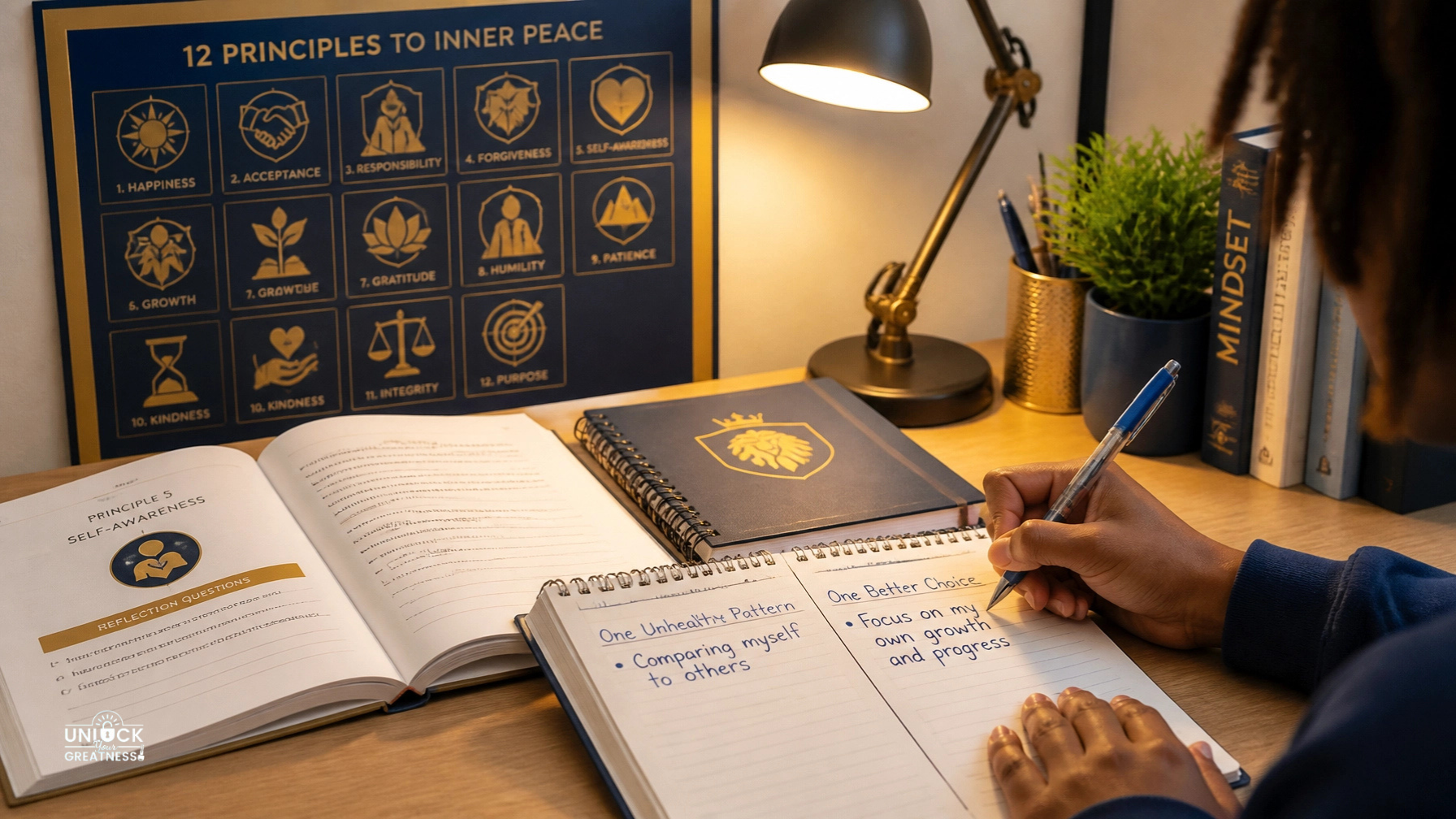
Take 10 minutes tonight to sit with your UYG Companion Workbook. Identify one habit that is holding you back. Is it late-night scrolling? Is it negative self-talk? Is it avoiding difficult conversations? Name it. You can't let go of what you haven't identified.
2. Say "Yes" to the Small Discomfort
Willingness is a muscle. Start small. Tomorrow, choose to do the hardest task on your to-do list first. Or, be the first person to speak up in a group project. By saying "yes" to small moments of discomfort, you train your brain to handle the bigger transformations.
3. Practice "Open-Handedness"
In our 12 Keys course, we talk about living with "open hands." If your hands are clenched tight around your old ways of doing things, you have no room to receive new wisdom, new opportunities, or new success. Throughout your day, literally check your posture. Are you defensive (clenched)? Or are you open? Remind yourself: "I am willing to see this differently."
Final Word: Your Journey Starts with a "Yes"
Greatness isn't reserved for the "perfect" or the "lucky." It is reserved for the willing.
If you are tired of feeling stuck, if you are done with the "I'll start tomorrow" cycle, then today is your day. The June Principle of Willingness is your invitation to drop the heavy baggage of the past and step into the bright, purposeful future God has for you.
Are you ready to unlock what’s next?
Your Homework:
Identify one "unhealthy pattern" you’ve been clinging to. Write it down. Then, write one "better way" you are willing to try this week.
Ready to go deeper?
If you’re serious about transforming your college experience and building a foundation for a successful life, don't walk this path alone. Join the UYG community and get the tools, coaching, and support you need to thrive.
👉 Enroll in the UYG 12 Keys Course Today!
👉 Download the UYG Toolkit